Worldwide shipping and a 100% guarantee that your figure will arrive in perfect condition

The Making
Every Miola Ceramics sculpture begins long before it touches the clay.
What you see in the finished piece is only the final expression of a process that demands patience, precision and an unwavering commitment to craftsmanship. From the first spark of an idea to the final quality inspection, each sculpture passes through ten carefully executed stages. Every one of them matters. A single imperfection at any point can compromise the harmony of the final work.
This devotion to every detail is what allows each creation to become something more than a ceramic figure: a piece with character, soul and lasting beauty.
Step 1 — The Idea
Every sculpture begins in the imagination.
Inspiration rarely arrives when I am looking for it. It may appear while swimming, walking through the city or painting. I never rush to sketch it down. If an idea is truly worth bringing to life, it remains vividly in my mind until I return to the studio.
Only then does the journey begin.
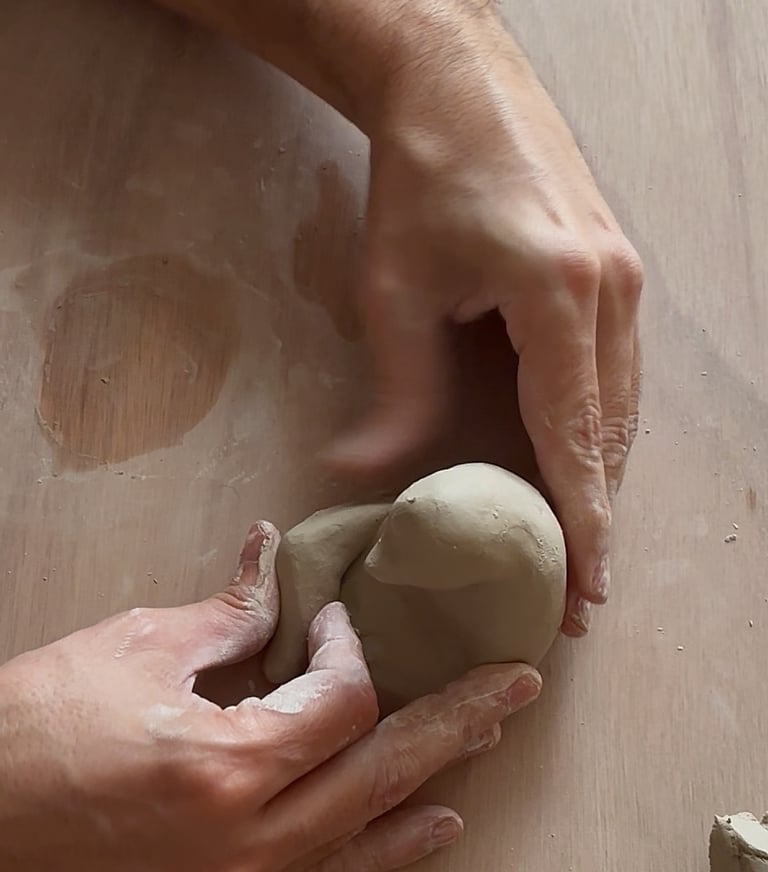
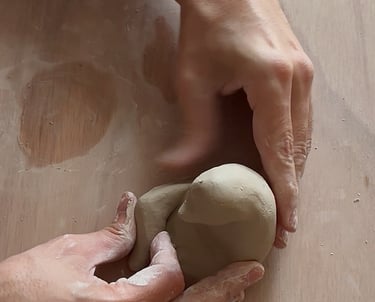
Step 2 — Sculpting
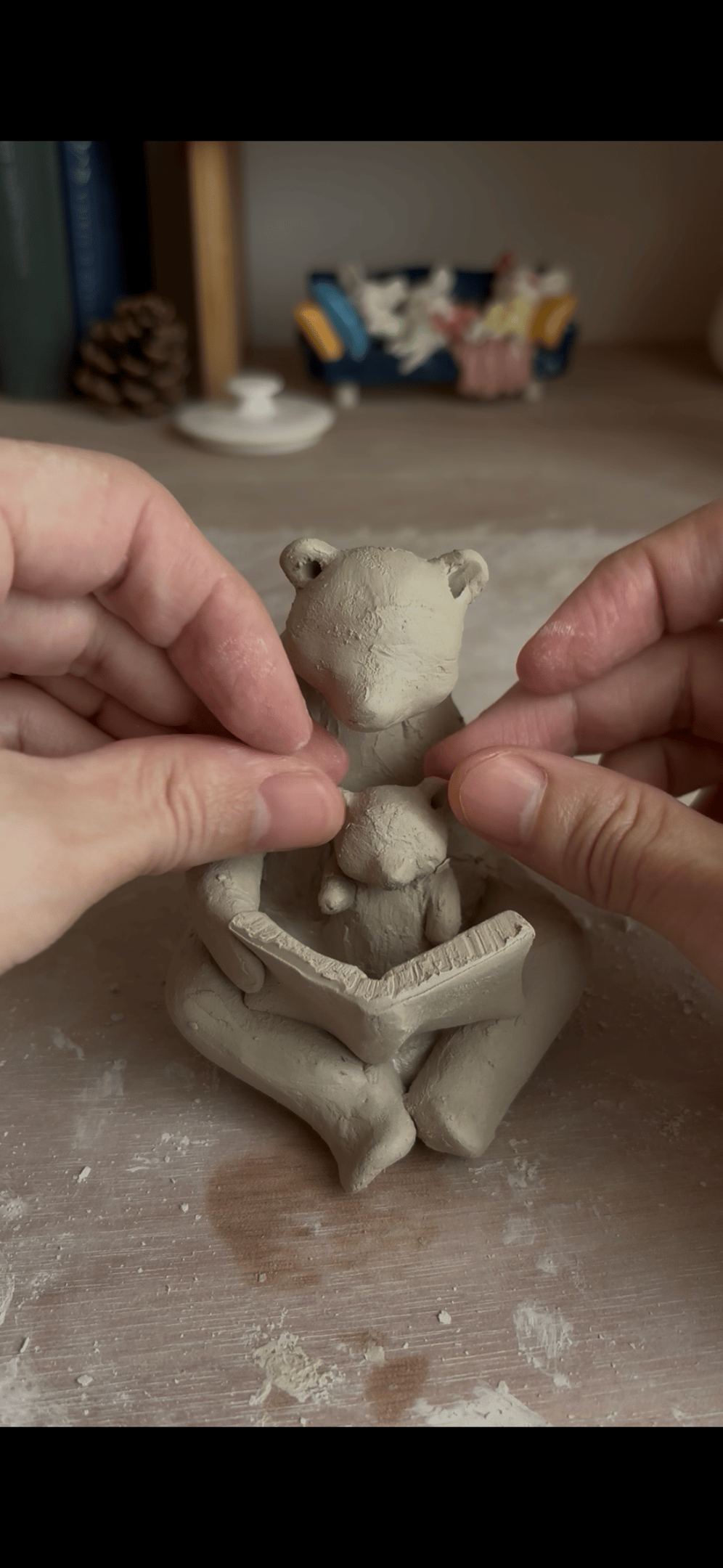
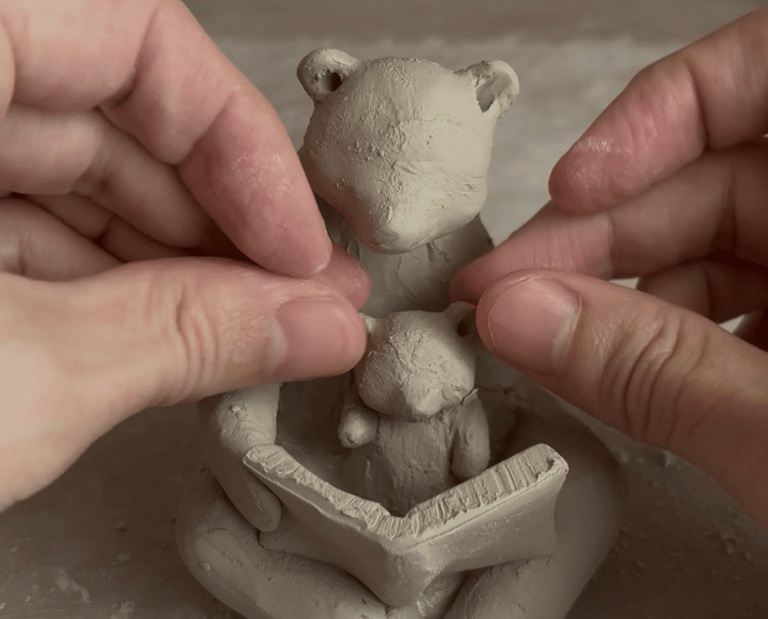
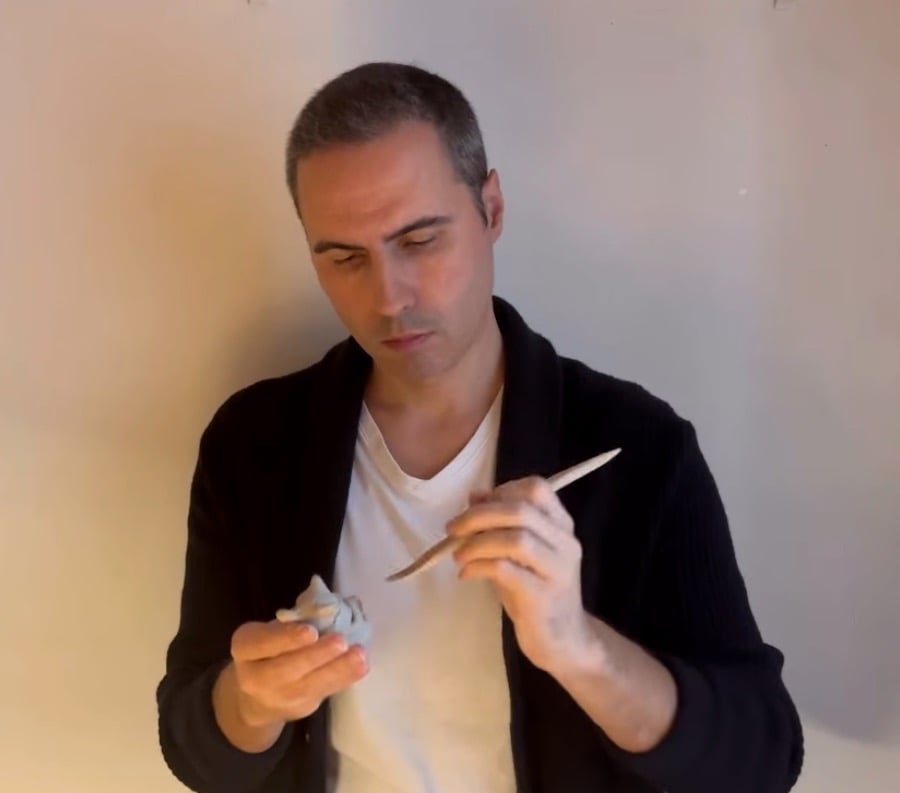
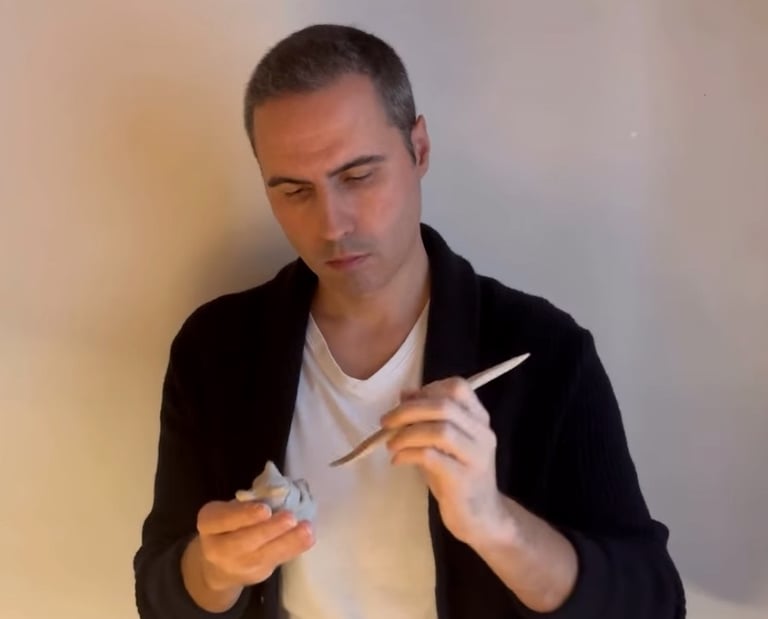
Each sculpture is shaped entirely by hand from a single block of clay.
No moulds. No casting. No mechanical processes.
Every curve, every expression and every tiny detail is patiently modelled in my Barcelona studio, allowing each piece to develop its own unique personality. No two sculptures are ever exactly alike.
Step 3 — Drying
Once sculpted, the piece is left to dry naturally for several days.
This is one of the most delicate stages of the entire process. Clay must lose its moisture slowly and evenly; any imbalance may create internal tension capable of damaging the sculpture.
Time cannot be rushed. Nature sets the rhythm.
Step 4 — Refining
When the clay has reached the perfect consistency, every surface is refined by hand using only water and soft brushes.
This is where subtle irregularities disappear and the sculpture acquires the smooth, elegant finish that characterises every Miola Ceramics creation.
At this stage the clay is still remarkably fragile. Every movement demands complete concentration, as even the smallest detail must be preserved with absolute care.
Step 5 — Resting
The refining process reintroduces moisture into the clay, making a second drying period essential.
The sculpture rests once again on the wooden shelves of my studio until it is perfectly prepared to receive colour.
Patience remains the most valuable tool of the ceramic artist.
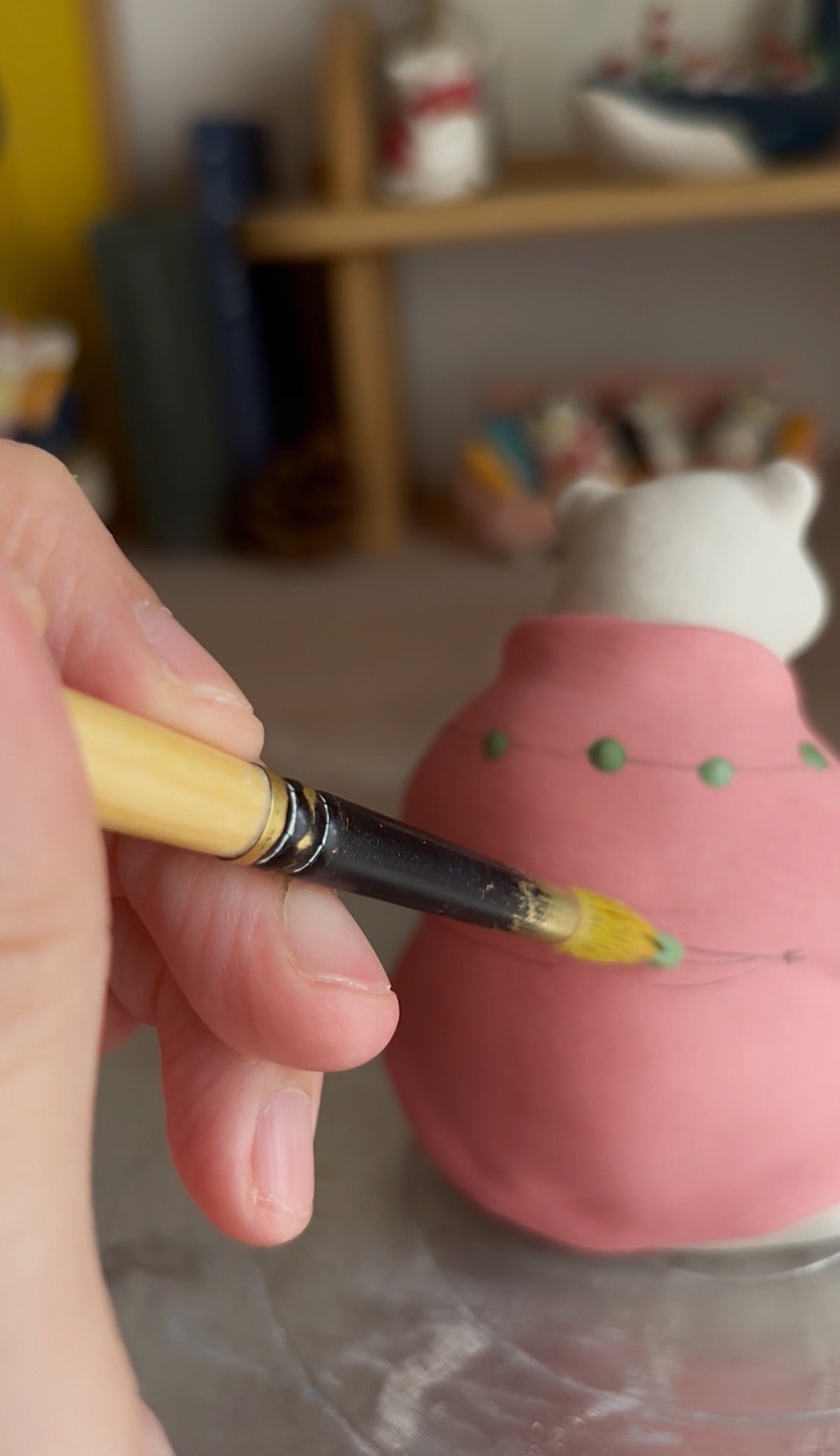
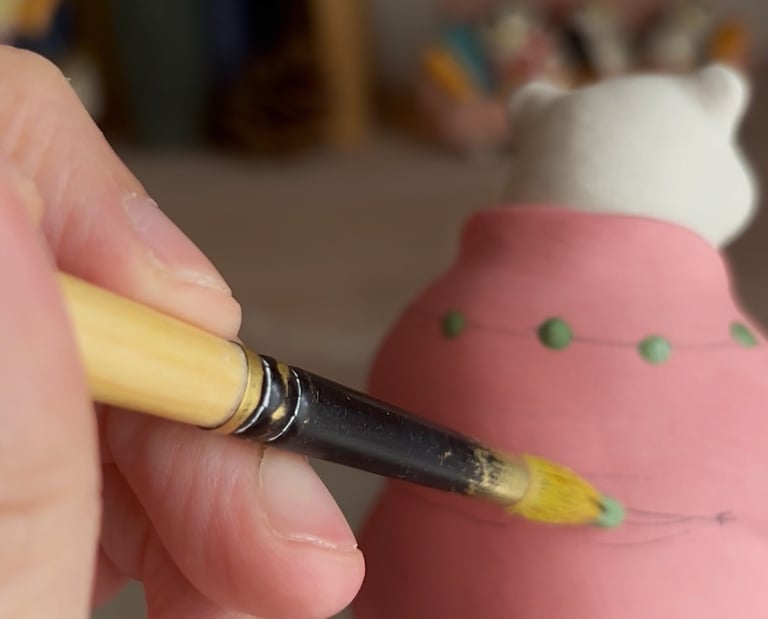
Step 6 — Painting
Colour gives each sculpture its individual personality.
Every piece is painted entirely by hand using premium ceramic underglazes, selected for their richness, permanence and subtle depth. Fine brushes of different sizes allow every expression, texture and tiny detail to be painted with precision.
This is often the longest stage of the entire process, as every sculpture deserves the same level of attention, whether it belongs to a collection or has been created as a bespoke commission.
Step 7 — First Firing
The painted sculpture is fired in a ceramic kiln at approximately 1,000°C for more than eight hours.
During this transformation, the clay hardens into ceramic and the colours become permanently bonded to the surface.
Fire completes what the hands have begun.
Step 8 — Glazing
After the first firing, each sculpture receives several carefully applied layers of transparent glossy glaze.
Applied by hand, this final coating enhances the colours, creates remarkable visual depth and gives every piece its luminous finish while protecting it for generations to come.
Step 9 — Second Firing
The sculpture returns to the kiln for its final firing.
Here, the glaze vitrifies, becoming one with the ceramic itself. Only after this second transformation can a sculpture truly be considered complete.
Step 10 — Quality Control
Ceramics is a craft that demands both skill and humility.
Even after years of experience, clay and fire retain an element of unpredictability. Occasionally, a piece may develop a subtle flaw during drying or firing. When that happens, it never leaves the studio.
Every finished sculpture undergoes a meticulous inspection before it is signed.
I do not seek industrial perfection, because true craftsmanship has never been about perfection. The tiny variations that naturally arise from working entirely by hand are part of the sculpture's identity and the unmistakable signature of its maker.
What I pursue instead is excellence.
Only when a sculpture fully embodies the standards that define my work does it become part of Miola Ceramics.
From that moment on, it is no longer simply a ceramic sculpture, but a handcrafted story, created to accompany someone for many years to come.
MIOLA Ceramics
Follow the process on my Instagram
Contact
Newsletter
miolaceramics@gmail.com
© 2026. All rights reserved.